
What Equipment Does a Commercial Fitness Center Need? A Planning Checklist
Sep 16, 2026
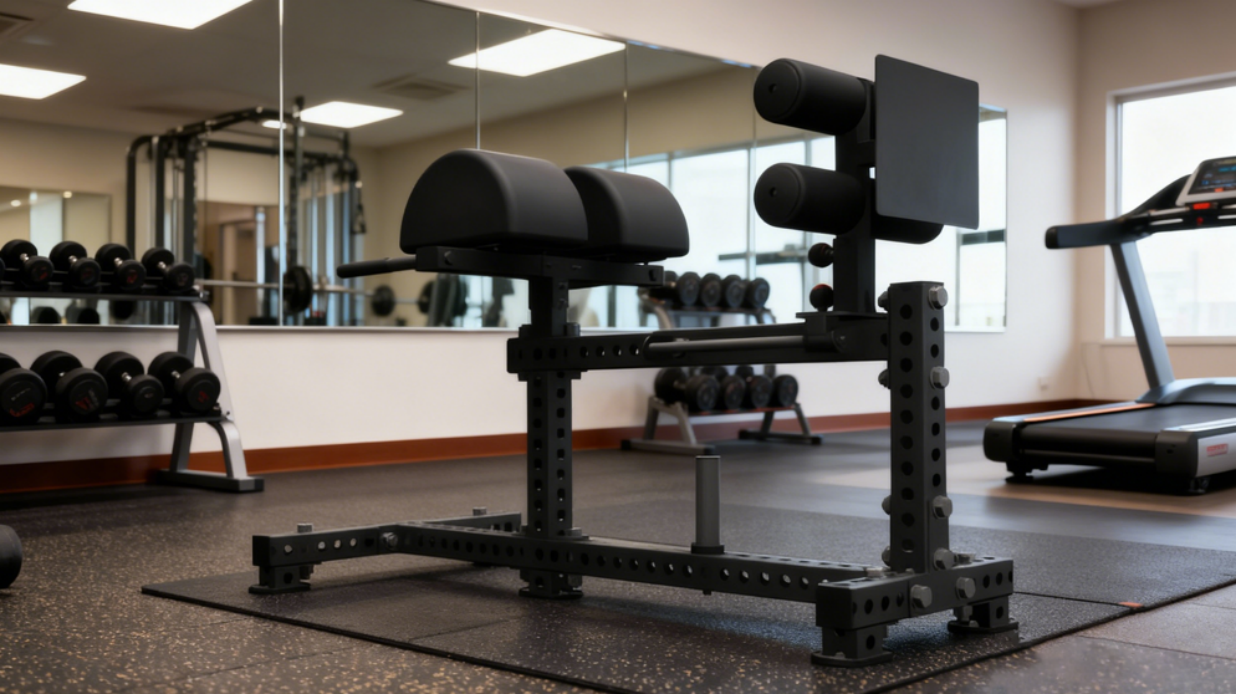
Nantong, Jiangsu Sep 15, 2026 (Issuewire.com) - Anyone who has walked into a half-finished gym knows the feeling: rows of treadmills near the door, a pile of dumbbells shoved into a corner, and a strength section that nobody can quite navigate. The problem usually isn't the budget. It's the plan. Most equipment lists start with brand names and model numbers, which turns a facility layout into a shopping spree. A better approach for any commercial fitness project is to organize gear by training movement, then check it against floor space and member volume. This checklist walks through that logic step by step, drawing on the product range built by manufacturers like Senfeng (Nantong Senfeng Sports Products Co., Ltd), a maker of commercial and home fitness equipment with more than eight years of production experience.
Start With Movement Domains, Not Brands
The cleanest way to build a commercial fitness center equipment list is to split it into four lines: cardio, free weights, fixed-resistance strength, and functional plus storage. Each line gets sorted into two tiers--must-have and optional--so the plan stays lean instead of ballooning into dozens of overlapping machines.
This framing matters because members move through a facility by activity, not by supplier logo. Someone warming up on a bike, then loading a barbell, then finishing on a cable stack is crossing three domains in one session. If the equipment list mirrors that flow, the buying decisions and the floor layout end up reinforcing each other rather than fighting.
Cardio and Free Weights: The Baseline
Cardio forms the entry point of almost every gym. The must-have items here are treadmills, ellipticals, and indoor cycling bikes. These three cover walking, running, low-impact stride work, and seated interval training, which handles the bulk of general membership demand. Treadmills tend to see the heaviest daily use, so build quality and motor rating deserve real attention at the sourcing stage.
Free weights come next, and this line is where a lot of budgets get muddled. The core set stays simple: hex dumbbells, fixed barbells, shock-absorbing rubber flooring, and a proper storage rack. Hex dumbbells resist rolling and sit flat on the floor, which cuts down on tripping and keeps a rack organized. The rubber flooring is not optional in practice--it protects the subfloor, dampens noise, and reduces the shock when loaded weights get set down. A dedicated storage rack ties the section together and keeps the space from turning into clutter within a week of opening.
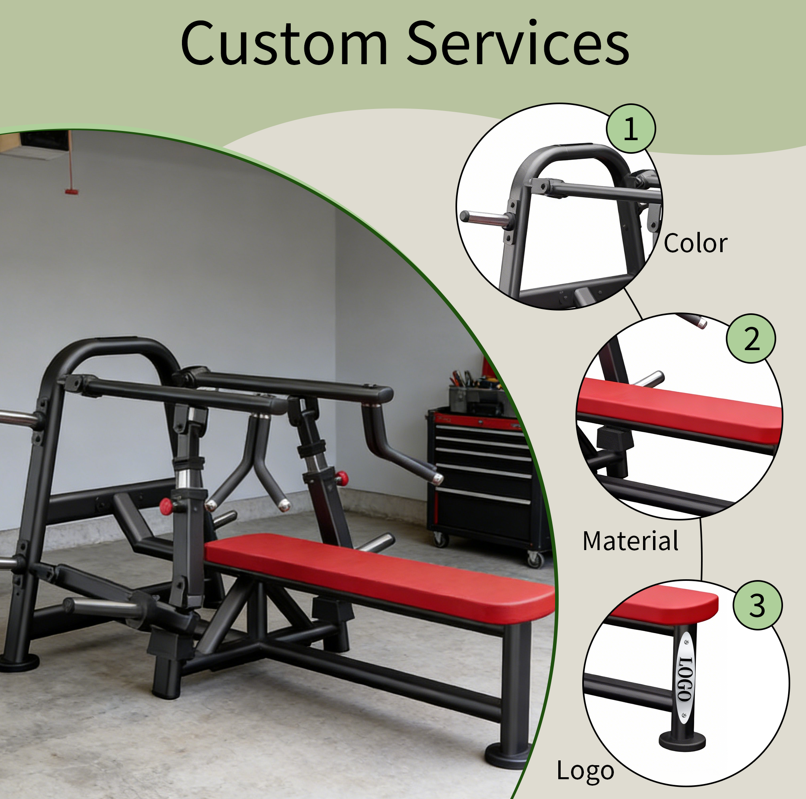
Senfeng produces these categories in-house rather than reselling, which means color and dimensions can be adjusted to fit a specific room or brand scheme. For operators sourcing multiple units, this matters because fitness equipment wholesale orders often need small tweaks that off-the-shelf suppliers won't accommodate.
Fixed-Resistance Strength by Muscle Group
Fixed-resistance machines earn their place by covering the major muscle groups with guided, lower-risk movement patterns. New members and rehab users lean on them heavily, and even experienced lifters use them for isolation work. The practical way to plan this line is by body region rather than by machine count.
For the chest, a flat chest press covers the primary pushing pattern. For the back, a lat pull down handles vertical pulling and is one of the most-used stations in any strength area. For the lower body, a leg press or leg extension unit covers the largest muscles in the body and tends to draw steady traffic. Rounding out the group, an adjustable bench extends the usefulness of the free-weight section by supporting incline, flat, and decline work with a single piece.
Keeping the fixed-strength line to these anchor stations avoids the common mistake of buying five machines that all train the same movement. Each unit should map to a distinct muscle group, and the list should only include equipment that a manufacturer actually produces and can support--no guessing at models that don't exist.
Arranging the Floor by Training Zone
A good equipment list only works if the layout respects how people train. Four zoning rules cover most commercial fitness center equipment installations.
- Place the strength area against a load-bearing wall. Power racks and cable machines carry weight and transmit force into the structure, so a solid wall is the right home for them.
- Position cardio near windows or a ventilation source. Treadmills and ellipticals generate heat and heavy breathing, and natural light plus airflow makes long sessions more bearable.
- Lay shock-absorbing rubber flooring across the free-weight zone and set the dumbbell rack within easy reach. This contains dropped-weight noise and keeps the busiest lifting area organized.
- Keep the functional zone in the center, with clear coaching lanes and open floor for stretching. A central location lets trainers move between clients without cutting through equipment rows.
These rules aren't rigid, but they solve the everyday friction points--noise bleed, crowding at popular stations, and dead space that nobody uses.
Behind the Equipment: Sourcing and Support
Equipment lists eventually meet reality at the supplier stage, and that's where a manufacturer's setup shows through. Nantong Senfeng Sports Products Co., Ltd runs self-production and self-sales, so quality control stays inside one operation rather than getting handed off between middlemen. Every batch passes inspection before shipment, which is the kind of step that quietly prevents the headaches of receiving a damaged rack or a treadmill that fails on install day.
For operators, a few practical points ease the sourcing process. Senfeng handles OEM and ODM work, accepts custom drawings and samples, and keeps minimum order quantities low, which suits both a single new studio and a larger fitness equipment wholesale order. Response times are quick--inquiries typically get answered within a couple of hours--and an after-sales team stays available for issues after the gear is installed. These are the unglamorous details that decide whether a fit-out finishes on schedule.
Putting the Checklist to Work
The four lines--cardio, free weights, fixed-resistance strength, and functional with storage--cover the equipment skeleton of a commercial fitness center. From there, the specific unit counts come down to two inputs: the square footage of the space and the expected member volume. A boutique studio and a full-scale club start from the same four-line framework but scale the quantities differently.
Once the requirement list is drafted, it can be submitted through the manufacturer's website for a one-on-one configuration plan and an itemized quote. That turns a rough checklist into a concrete layout with real pricing, which is the point where planning stops being theory. More product detail and specifications are available at https://senfengfitness.com/
Media Contact
Nantong Senfeng Sports Products Co., Ltd
+86 19514497849
Source :Nantong Senfeng Sports Products Co., Ltd
This article was originally published by IssueWire. Read the original article here.
More News


































Recommended



Indonesian financial tango not a contest

Apple seeks to transform smart home ecosystem






Small AI, big promises for privacy


Adobe goes AI to the max

Hyundai India to unveil record $3.3b IPO

China’s GAC Group to invest $27m in Pony.ai





APIs in the world of AI
YOUR NEWS, OUR NETWORK.
Do you have Great News you want to tell the world?
Be it updates about your business or your community, you can make sure that it’s heard by submitting your story to our network reaching hundreds of news sites across 6 verticals.