
Manufacturer vs Distributor: Which Gym Equipment Supply Model Fits Commercial Enterprises?
Sep 16, 2026
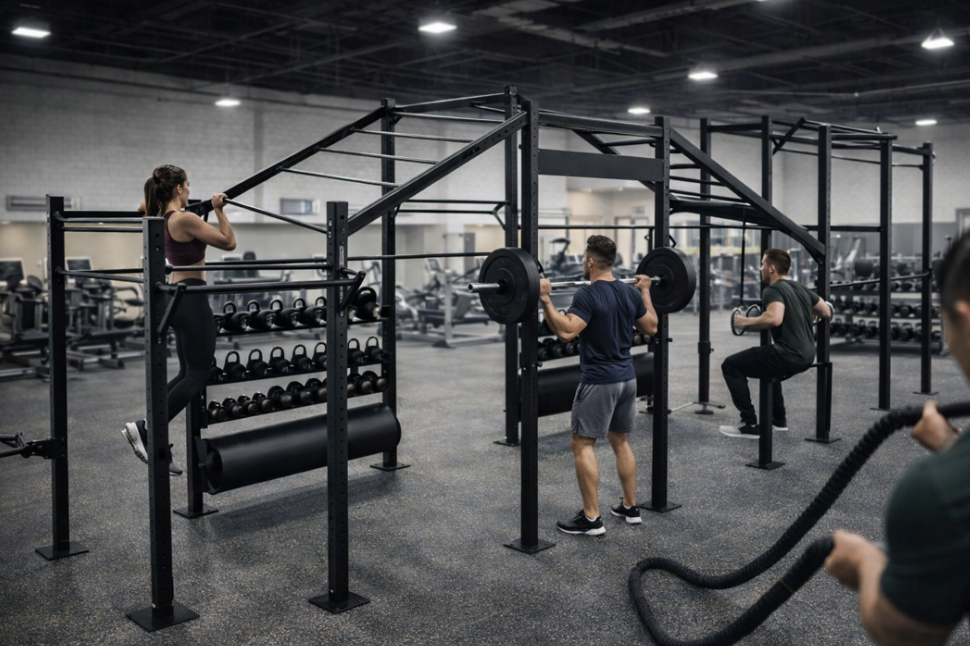
Nantong, Jiangsu Sep 15, 2026 (Issuewire.com) - Here is a question many procurement managers ask before signing a purchase order: is it smarter to buy directly from the factory, or to source through a distributor sitting closer to home? The answer shapes budgets, delivery schedules, and even how a new fitness floor looks on opening day. Commercial buyers rarely order a single machine; they plan a full room, and the sourcing route affects every piece in it. Choosing the right gym equipment supply model matters because the sticker price rarely tells the whole story.
On one side sits the manufacturer, the party that builds racks, machines, and free-weight lines from raw steel. On the other sits the distributor, the party that keeps stock on hand and covers the last mile to the gym door. Each carries its own strengths, costs, and timelines. Understanding how these two roles divide the work makes it far easier to plan a purchase that fits real operating conditions.
Mapping the Supply Chain: Two Roles on One Line
The simplest way to think about it: the factory makes the product, and the distributor handles inventory and final delivery. Both sit on the same supply chain, yet they solve different problems.
A manufacturer such as Senfeng (Nantong Senfeng Sports Products Co., Ltd.) works at the production end, turning drawings and specifications into finished commercial gym equipment. A distributor, by contrast, buys in advance, stores goods locally, and ships smaller quantities on short notice.
Buyers frequently confuse two numbers here. The first is the ex-works price, meaning the cost of goods as they leave the factory. The second is the landed cost, meaning everything added on the way to the gym: ocean freight, customs clearance, local warehousing, and inland transport. A low factory quote can still turn into a higher final figure once these steps stack up, so it pays to compare total cost rather than unit price alone.
Counting the Hidden Numbers, Not Just the Unit Price
Factory-direct buying usually offers a lower base price, plus the freedom to customize color, logo, and dimensions. The trade-off is responsibility: the buyer takes on freight, clearance, and storage. Distributor buying carries a higher unit price and a fixed catalog of SKUs, but it rewards the buyer with ready stock, quick handover, and easy returns.
Consider a single Smith Machine as an example. Ordered factory-direct, the timeline runs through production, quality inspection, packing, ocean shipping, port clearance, and inland delivery before the machine reaches the training floor. That path ties up capital for weeks and asks the buyer to manage several handoffs. Ordered from a local distributor, the same machine can move from a nearby warehouse to the gym in days, though at a higher price and with less room to adjust the specification.
Neither route is simply better. The right choice depends on how much cash a company can commit up front and how long it can wait.
Matching the Route to the Situation
A few clear patterns help guide the decision.
- New Full Fit-Outs: A newly opening chain or corporate gym that needs a full fit-out often benefits from the factory-direct route. Ordering everything at once keeps the visual identity consistent across every rack and bench, and it locks in a matched source for future spare parts.
- Restocking and Repairs: A facility that already runs equipment and only needs restocking or urgent repair parts often leans toward a distributor. When a cable snaps or a seat pad wears out, waiting for a full production cycle is not realistic.
- A Mixed Approach: A middle path works well for many operators. Main machines come factory-direct for cost and customization, while wear parts such as handles, cables, and seat pads come through a distributor for speed.
Framing the question this way keeps attention on operational needs rather than on price tags alone.
Why Senfeng Fits the Factory-Direct Route
For companies leaning toward direct sourcing, a capable gym equipment supplier removes much of the friction. Nantong Senfeng Sports operates its own production line across a facility of around 12,000 square meters, which supports both large single orders and mid-sized commercial projects. This scale matters because it shows factory-direct sourcing is not reserved only for full-container buyers.
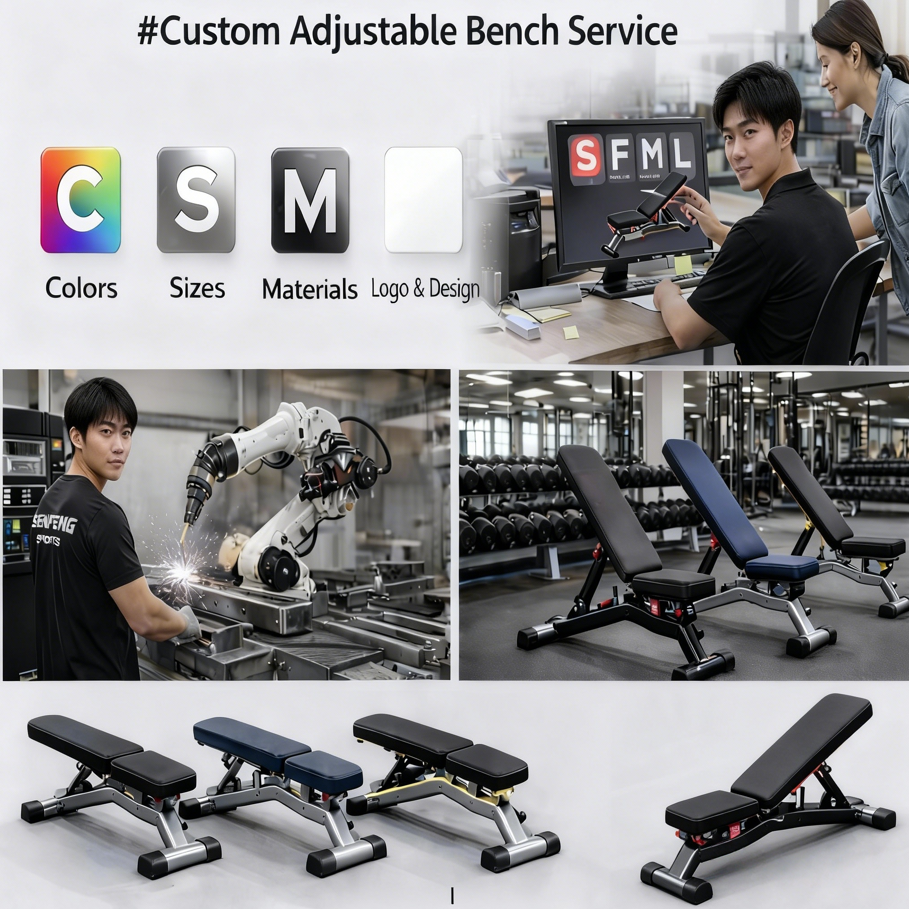
Flexible order handling adds further value. As a self-producing and self-selling factory, Senfeng accepts a low minimum order quantity and supports both wholesale and retail partnerships. A team can request samples or submit drawings for review, and product color and size can be adjusted to match a project's requirements. This means a mid-sized order can still receive genuine customization rather than a fixed, take-it-or-leave-it catalog.
Packaging plays a quieter but real part too. Knock-down (KD) packing reduces the shipping volume of bulky machines, which helps control ocean freight cost per unit. Combined with more than eight years of production experience, quality inspections carried out before shipment, and available OEM and ODM support, these details make the factory route practical for buyers who want customization without giving up dependable output.
Response time rounds out the picture. Senfeng offers 24-hour service with quick replies, so drawings, samples, and specification questions move forward without long gaps. For a mid-sized commercial project, that steady communication often matters as much as the price itself when planning a rollout.
Choosing With Clear Eyes
Factory-direct and distributor models each carry genuine strengths. The manufacturer route rewards buyers who value lower base cost, deep customization, and a single matched source across a full set of gym equipment. The distributor route rewards buyers who value speed, small quantities, and simple returns.
The deciding factors come down to a company's own warehouse capacity, its restocking rhythm, and how much delivery lead time it can absorb. A business with storage room and a planned opening date has different needs from one patching a busy floor mid-season. Weighing these against the gym equipment supply model on offer, rather than reacting to unit price alone, leads to steadier purchasing decisions.
Enterprises weighing their next order are welcome to send an inquiry or explore the product range and factory details in more depth. More information is available at https://senfengfitness.com/
Media Contact
Nantong Senfeng Sports Products Co., Ltd
+86 19514497849
Source :Nantong Senfeng Sports Products Co., Ltd
This article was originally published by IssueWire. Read the original article here.
More News





















Recommended


Indonesian financial tango not a contest

Apple seeks to transform smart home ecosystem





Small AI, big promises for privacy


Adobe goes AI to the max
Hyundai India to unveil record $3.3b IPO

China’s GAC Group to invest $27m in Pony.ai



APIs in the world of AI
YOUR NEWS, OUR NETWORK.
Do you have Great News you want to tell the world?
Be it updates about your business or your community, you can make sure that it’s heard by submitting your story to our network reaching hundreds of news sites across 6 verticals.